
Losing multiple teeth or entire dental arches impacts your ability to chew, speak, and maintain facial structure. Full and partial dentures restore complete dental rows, filling missing gaps while giving your smile a uniform appearance. In our office, we design conventional appliances as well as implant-secured restorations that anchor directly to the jawbone, eliminating the slipping and adhesive mess common with traditional dentures.
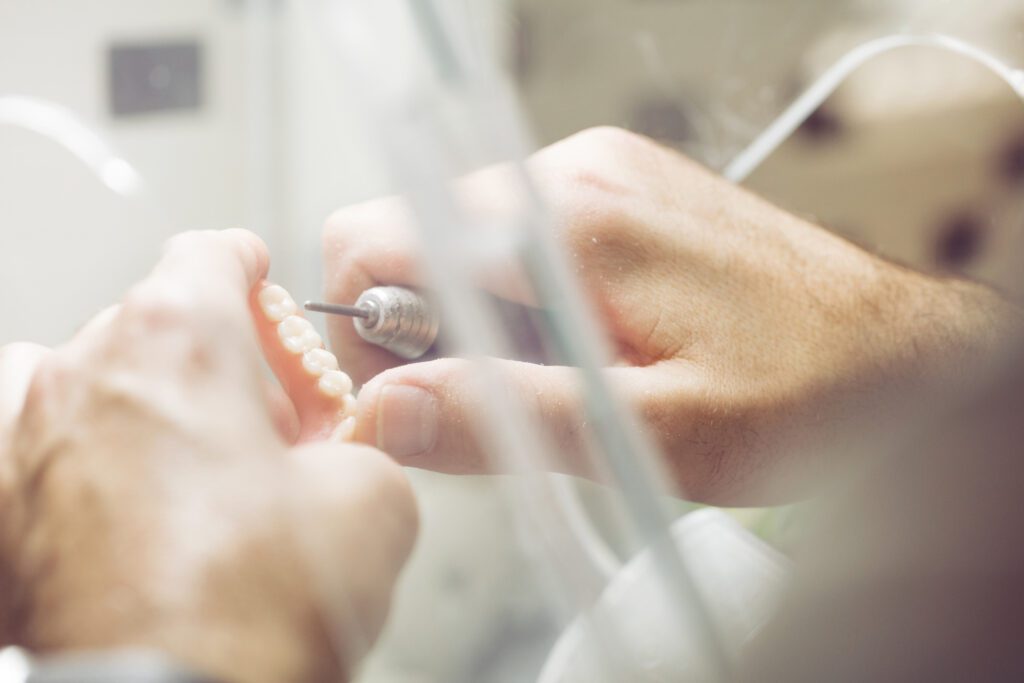
Types of Dentures
The two main types of dentures are full and partial dentures. Partials are metal and acrylic restorations that can replace at least two teeth. Typically, a partial can replace multiple teeth with false teeth on a gum-colored base attached to natural teeth with metal loops. Complete dentures can restore upper and lower tooth arches.
Full and partial dentures are also categorized as follows:
- Immediate denture: We place this temporary denture after we remove any remaining infected or damaged teeth. This immediate denture ensures you have teeth as your gum tissues heal. We will replace this denture once the lab creates your final restoration.
- Conventional: After removing the remaining problem teeth and healing your gums, we place a conventional denture. Unlike an immediate denture, a conventional denture is permanent.
- Overdenture: A traditional overdenture fits over any remaining prepared teeth. You can also secure an overdenture in place with dental implants, or small titanium posts we place in the jaw bone. These posts act as new tooth roots. Implant-retained dentures are removable, and you snap on the denture to the implants. If you get an implant-supported denture, you have a fixed restoration.
Getting Dentures and Partials in Flower Mound, TX
Before you get your restoration, we will ensure you complete any required pretreatments. These treatments include anything from gum disease treatment to bone grafting. If you receive implants, you need enough jaw bone to support the implant posts. Grafting takes healthy bone from another part of the mouth or donor’s bone to build up your natural jaw bone.
In addition, if you have severely infected or damaged teeth that require removal, we will perform a tooth extraction. Once you are in good oral health, we will begin treatment. If you receive a removable denture, we will first take dental impressions. Then, we send measurements and the desired shade of your dentures to a lab. Once the lab completes the dentures, you will return for a fitting.
Implant Denture
If you receive a denture, we will surgically implant the post. Dental implants consist of a post that goes into the jawbone, a connector piece, and the restoration. It takes time for the implant post to heal. Over three to six months, the jaw bone grows around the implant post. This process is called osseointegration.
Once you heal, we place the abutment, or the piece that connects the implant post, to the restoration. Your gums will need several weeks to heal. We will also take impressions to send to the lab for your restoration. Finally, you will return to our office, where we will secure your final denture.
Implant Vs. Traditional Dentures
When it comes to replacing missing teeth, there are two main options: traditional dentures and implant dentures. Both can help restore your smile, but some key differences can make one a better choice for certain people.
Better Stability and Comfort: One of the biggest benefits of implant dentures is their stability. Traditional dentures can slip or move around when you eat or speak. This is not only uncomfortable but can also make you feel self-conscious. With implant dentures, the implants hold the dentures firmly in place. This means you don’t have to worry about them slipping, making eating your favorite foods easier and speaking clearly.
Improved Chewing Ability: Traditional dentures can limit the types of foods you can eat, especially hard or chewy foods. Because implant dentures are anchored securely to your jaw, you can enjoy a wider variety of foods without worrying about your dentures shifting or becoming uncomfortable. This is a major advantage for people who want to eat all kinds of food without restrictions.
Preserving Jawbone Health: Another big advantage of implant dentures over traditional dentures is that they help preserve the health of your jawbone. When you lose teeth, your jawbone can start to shrink over time. This can cause your face to look sunken or older. Dental implants stimulate the bone in your jaw like natural tooth roots do. This helps to keep your jawbone strong and healthy, preventing bone loss.
Natural Appearance: Implant dentures look more natural than traditional dentures. Since the implants are securely anchored in your jaw, the dentures fit much better and look more like natural teeth. Traditional dentures can sometimes create a “fake” appearance because they don’t have the same secure fit. Implant dentures also often feel more natural when talking or laughing, helping you feel more confident.
Long-Term Investment: While implant dentures may cost more upfront than traditional dentures, they are often a better long-term investment. Traditional dentures may need to be replaced or relined over time due to wear and tear, while implant dentures are durable and can last many years with proper care. This makes implant dentures a more cost-effective choice in the long run.
Full arch dental implants and full mouth restoration
Replacing an entire upper or lower arch of missing teeth requires a balance between long-term stability, biting power, and overall financial investment. Patients exploring full mouth dental implants often evaluate choices between removable snap-in overdentures and permanent, fixed full arch implant bridges. While traditional full dentures rest directly on gum tissue, full arch implant restorations utilize strategically placed dental implants to lock your replacement teeth securely to the jawbone.
Understanding the cost structure of full mouth dental implants involves looking at both immediate clinical steps and long-term durability. The total investment for full arch treatment reflects several key components:
-
Preliminary oral surgery, including necessary tooth extractions or bone grafting procedures
-
The number and material composition of the dental implant posts placed in the jawbone
-
Temporary healing prostheses that maintain your smile during the osseointegration period
-
The final full arch restoration, whether crafted from high-strength zirconia or custom acrylic
Choosing a full arch implant restoration stops progressive jawbone loss and eliminates the ongoing expense of denture adhesives or frequent relines. Our team works closely with each patient to outline transparent treatment plans, leverage applicable dental insurance benefits, and offer flexible payment arrangements through CareCredit and Alphaeon.
How do I clean my dentures?
Removable and fixed dentures require different care. If you get a removable denture, you must remove your appliance to sleep. Putting your restoration in a cup of dissolvable denture cleaner will keep it moist. You can also brush your mouth and denture separately.
Implant-supported dentures stay in the mouth, so you must brush your denture and any remaining teeth simultaneously. We also recommend that you begin eating softer foods and gradually working up to harder foods over time. It takes time to get used to your new dentures.
Professional denture maintenance, relining, and repair services
Even high-quality dentures require periodic professional care to maintain a comfortable fit and natural appearance. Over time, the underlying jawbone and gum tissues naturally change shape, causing previously snug restorations to loosen, slip, or create tender spots along the gumline. Scheduling routine denture maintenance near me ensures that your appliance continues to support your speech, chewing ability, and facial structure comfortably.
When a restoration begins to feel loose or develops minor wear, several clinical solutions can restore its original fit:
-
Denture Adjustments: Minor surface modifications that relieve pressure points and eliminate localized gum sores.
-
Hard or Soft Relining: Adding a fresh layer of base material to the underside of the denture to match your current gum contours.
-
Local Denture Repairs: Fixing accidental fractures, replacing chipped false teeth, or reinforcing cracked acrylic bases.
-
Rebase Services: Replacing the entire pink acrylic base while retaining your existing, undamaged custom teeth.
Attempting to repair or adjust dentures at home with commercial glues can permanently damage the restoration and irritate soft oral tissues. If your denture slips during meals or suffers sudden damage, visiting our office for professional evaluation protects your oral health and extends the lifespan of your appliance.
Dentures and partials FAQs
Learn more about dentures in our Flower Mound, TX office with answers to these common questions:
What is “teeth in a day”?
Teeth in a Day is a process that ensures you are not without teeth during restorative treatment. We remove teeth, place implants, and place temporary dentures during this process.
What are snap-in dentures?
Snap-in dentures are also known as implant-retained dentures. These are removable dentures that use implants for support. A surgeon places dental implant posts in the jaw that act as artificial tooth roots. Implants are permanent and fixed. However, you can remove snap-in dentures for cleaning.
Can you eat with dentures?
Yes, you can eat with dentures. However, can make eating hard and crunchy foods difficult. You may need to cut tougher foods like steak into smaller pieces. If you get implant dentures, you restore much more of your bite function, so you have less trouble biting. Implant dentures also lessen the chance of slipping dentures.
How long does it take to get used to dentures?
It will take two weeks to get used to dentures. In the first week after you get your removable denture, you may experience increased saliva production and gum sores. Whether you receive a removable or implant denture, you will notice a difference in your speech and eating.
What dentures look most natural?
Dentures that use porcelain materials for false teeth often look natural. During denture treatment, our dentist will color-match dentures to other natural teeth or your desired tooth shade.
How much are dentures?
The cost of dentures depends on multiple factors:
- Type of dentures
- Whether you need implants
- Pretreatments
- Materials choosen
Our office will work for you to ensure you have affordable dentures. We accept CareCredit and Alphaeon. Our office also accepts dental insurance to cover part of your treatment cost.
How long do dentures last?
Removable dentures usually last between 5 to 10 years. However, they must be adjusted or replaced because your mouth can change shape as you age. Implant-supported dentures can last 15 years. The implant posts that support dentures are permanent, and the denture can last longer with this support.
How long does it take to adjust to implant dentures?
Adjusting to implant-supported dentures usually takes a few weeks to a few months. At first, you might feel some soreness or discomfort, and it might take a little time to get used to how the dentures feel in your mouth. During this adjustment period, you might need to learn how to speak and eat with the dentures. Our dentist can provide tips to make this process easier and ensure everything fits well.
Schedule an appointment today
Replace all your lost permanent teeth with a long-lasting denture. Call us for dentures and partials at 972-539-4776. Schedule a dental appointment with us online. At your next visit, let us know if you have any questions about dentures. We’re here to help.