
Chronic snoring, morning headaches, and persistent daytime exhaustion often signal obstructive sleep apnea, a condition where throat muscles relax and repeatedly block your airway during sleep. Left unaddressed, these breathing interruptions strain your cardiovascular system and disrupt deep rest. At Flower Mound Family Dentistry, we evaluate upper airway structures and provide targeted oral appliance therapy to keep your breathing passage open throughout the night.
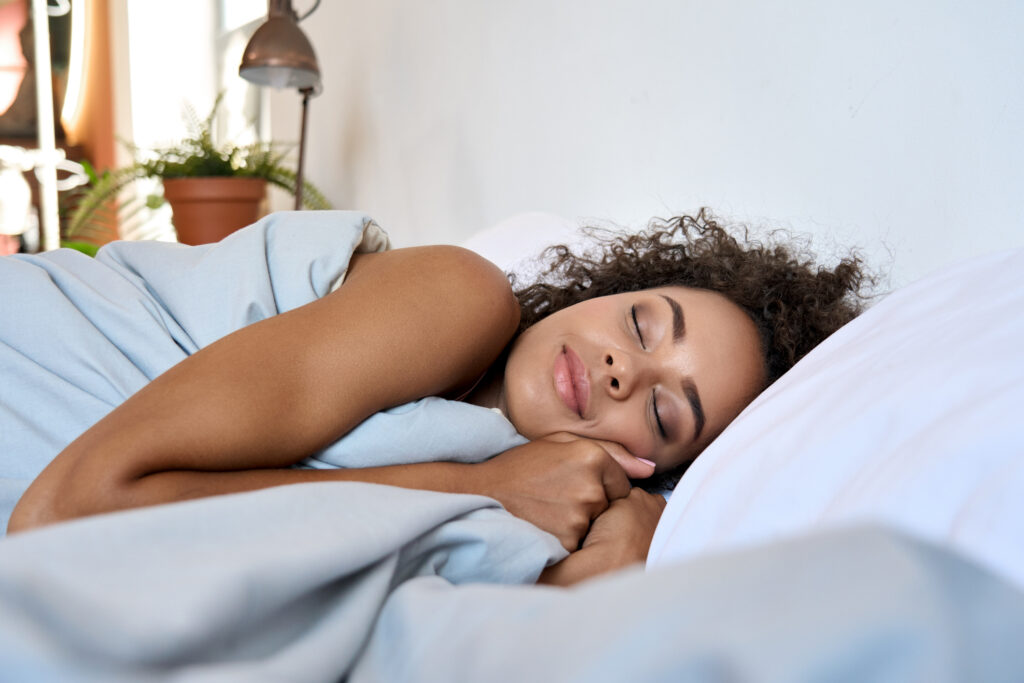
Sleep apnea in Flower Mound, TX
The most common form of sleep apnea occurs when the muscles in your throat relax, causing your airway to contract. Come into Flower Mound Family Dentistry to discuss sleep apnea treatments and solutions. Our team will start with a sleep exam to test for potential sleep apnea. This will enable our dentists to recognize and pinpoint any risk factors you may have for sleep apnea through a series of screening questions.
You will also be required to have a CT scan done. This scan will provide an image of your airway and mouth so your dentist can quickly pinpoint any blockages in your airflow. Your Flower Mound dentist will develop a treatment plan specific to your needs.
Our team wants you to get the whole night’s sleep you deserve. A fitted oral appliance is the most common and effective solution to sleep apnea. This appliance will restore airflow while you sleep, keeping your throat from collapsing and helping you get through the night without waking up.
Comprehensive sleep apnea testing and home sleep studies
Accurate diagnosis is the cornerstone of effective sleep apnea treatment. Many patients searching for a sleep study in Flower Mound or sleep apnea testing are unsure whether they need an overnight lab stay or a convenient at-home evaluation. At our office, we streamline the diagnostic pathway by combining advanced in-office imaging with comfortable home sleep testing options.
During your initial evaluation, our clinical team performs a comprehensive airway examination utilizing 3D cone-beam computed tomography (CBCT). This non-invasive scan generates precise cross-sectional images of your nasal passages, soft palate, and throat geometry, allowing your dentist to pinpoint anatomical narrowings or airway blockages.
Our diagnostic process includes:
Detailed clinical screening questionnaires to identify personal risk factors and day-to-day fatigue patterns
High-resolution 3D airway imaging to visualize soft tissue collapse and nasal passage constriction
Convenient home sleep test (HST) kits that record oxygen levels, heart rate, and breathing pauses in your own bed
Collaborative review with board-certified sleep physicians to confirm a formal diagnosis of obstructive sleep apnea
What are the dangers of untreated sleep apnea?
While sleep apnea might seem like just a loud snoring problem, leaving it untreated can lead to serious health problems.
Interrupted Sleep and Daytime Fatigue
One of the first signs of sleep apnea is loud, frequent snoring followed by choking or gasping during sleep. Because the brain wakes the body every time breathing stops, people with sleep apnea never get the deep, restful sleep they need. As a result, they often feel tired during the day, even after what seems like a full night’s sleep.
This constant tiredness can make concentrating, staying alert at work or school, and safely driving a car hard. People with untreated sleep apnea are more likely to get into car accidents due to drowsy driving.
Heart Problems and High Blood Pressure
Sleep apnea puts a lot of stress on the heart. Every time breathing stops, oxygen levels in the blood drop. This makes the heart work harder, raising blood pressure and leading to heart disease over time. Untreated sleep apnea is linked to an increased risk of high blood pressure, heart attacks, irregular heartbeats, and even strokes. For people who already have heart problems, sleep apnea can make their condition worse.
Weight Gain and Diabetes Risk
People with sleep apnea often struggle with weight gain, and being overweight can also increase the risk of developing sleep apnea. This creates a hard-to-break cycle. Untreated sleep apnea can also raise the risk of developing type 2 diabetes. When the body doesn’t get enough rest, it has trouble using insulin properly, leading to higher blood sugar levels. Many people with sleep apnea also suffer from metabolic syndrome, which includes high blood pressure, high blood sugar, and unhealthy cholesterol levels.
Mental Health Effects
Lack of sleep affects more than just the body; it also affects the brain. People with untreated sleep apnea often feel irritable, anxious, or depressed. Memory problems and trouble focusing are also common. Over time, sleep apnea can lower your quality of life and make everyday tasks feel harder.
Oral appliance therapy vs. CPAP: Comfortable snoring solutions
For patients struggling with loud snoring or CPAP intolerance in Flower Mound, Colleyville, Grapevine, and Southlake, custom oral appliance therapy offers a quiet, portable alternative. While continuous positive airway pressure (CPAP) machines force air through a face mask, custom mandibular advancement devices gently position your lower jaw forward during sleep. This subtle movement keeps the soft tissues at the back of your throat from collapsing, holding your airway open naturally.
Comparing oral appliances to traditional CPAP therapy highlights key advantages for mild-to-moderate obstructive sleep apnea:
Eliminates noisy motors, bulky facial straps, and dry nasal passages associated with CPAP masks
Provides an easy-to-clean, compact solution that fits in carry-on luggage for business travel or vacation
Delivers significantly higher patient compliance rates due to enhanced comfort during sleep
Reduces chronic snoring dramatically by preventing vibration in the soft palate and throat tissues
Custom-fitted mouthguards are crafted from digital impressions to ensure a precise, comfortable fit over your teeth. By stabilizing your bite and forward jaw position, oral appliance therapy helps you achieve deep, uninterrupted sleep without the hassle of a machine.
Strain on Relationships
Loud snoring and restless nights can also affect partners and family members. Sleep apnea can make it hard for others to sleep in the same room, leading to frustration and poor sleep. Treating sleep apnea can help improve not only your health but also your relationships.
Airway dentistry and TMJ alignment for sleep health
Airway dentistry focuses on the structural relationship between your jaw alignment, dental arches, tongue posture, and open breathing passages. Patients seeking an airway dentist or a TMJ specialist often do not realize that chronic jaw clenching, night-time teeth grinding (bruxism), and morning jaw soreness are directly connected to compromised nighttime breathing.
When your airway constricts during sleep, your brain signals the jaw muscles to clench and move forward to open the throat passage. This subconscious reflex puts severe stress on your temporomandibular joints (TMJ) and surrounding facial muscles, leading to chronic headaches, neck pain, and uneven tooth wear.
Key structural goals of airway-focused dental care:
Widening the functional oral volume so your tongue rests comfortably against the palate rather than blocking the throat
Aligning the temporomandibular joint (TMJ) to prevent joint inflammation and muscle fatigue
Preventing teeth grinding caused by subconscious nighttime suffocation reflexes
Restoring full nasal and oral breathing capacity for improved nighttime oxygen saturation
By addressing structural jaw misalignment alongside sleep-disordered breathing, airway dentistry provides lasting relief for both sleep apnea symptoms and TMJ pain.
Sleep Apnea FAQs
Sleep apnea can seriously impact your entire body. Learn more by reading the answers to these commonly asked questions.
Am I a candidate for an oral sleep appliance?
You might be a candidate for an oral sleep appliance if you have mild to moderate sleep apnea or snore frequently. You can also benefit if you have sleep apnea but can’t tolerate a CPAP machine or want a more comfortable and portable solution. Talk to your doctor or dentist to see if this treatment suits you. They’ll review your health history and may recommend a sleep study to determine your needs.
Do I have sleep apnea if I snore?
Snoring can be a sign of sleep apnea, but not everyone who snores has this condition. Sleep apnea is a sleep disorder in which breathing stops and starts repeatedly at night. Common symptoms include loud snoring, gasping for air, tired even after a full night’s sleep, and morning headaches.
How does sleep apnea affect heart health?
Sleep apnea can have a serious impact on your heart health. Your body doesn’t get enough oxygen when you stop breathing during sleep. This puts extra stress on your heart and can lead to problems like high blood pressure, irregular heartbeats, heart attacks, or even heart failure over time.
Each time your breathing stops, your body releases stress hormones that make your heart work harder. Over time, this can strain your heart and increase your risk of heart disease.
How does weight impact my risk of sleep apnea?
Your weight can greatly affect your risk of developing sleep apnea. Extra weight, especially around your neck and throat, can pressure your airway while you sleep. This makes it harder for air to flow in and out, increasing the chances of your airway becoming blocked.
Being overweight or obese is one of the most common causes of sleep apnea. Losing weight can help reduce the amount of fat around your airway, lowering your risk or improving your symptoms if you already have sleep apnea.
Can you cure sleep apnea?
No, OSA, the most common type of sleep apnea, is not curable. While a complete cure isn’t always possible, treatment can greatly improve your quality of life. Long-term management includes using devices like CPAP or oral sleep appliances, lifestyle changes, and regular medical checkups for most people.
How does sleep apnea affect energy levels?
Sleep apnea can significantly lower your energy levels because it disrupts your sleep. When you have sleep apnea, your breathing stops and starts repeatedly during the night. These pauses interrupt your sleep cycle, even if you don’t fully wake up each time. This means your body doesn’t get the deep, restful sleep it needs to recharge. Without enough quality sleep, you may feel tired, sluggish, or drowsy during the day. This can make concentrating, staying productive, or enjoying daily activities harder.
Can sleep apnea affect children?
Yes, sleep apnea can affect children. It happens when a child’s breathing is interrupted during sleep, just like in adults. However, the causes and symptoms may differ. Enlarged tonsils and adenoids are often the main cause of sleep apnea in children. Other factors, like obesity, allergies, or facial structure, can also play a role.
Common signs of sleep apnea in children include:
- Snoring loudly
- Pausing or gasping for air while sleeping
- Restless sleep or frequent waking up
- Bedwetting or sleeping in unusual positions
- Daytime sleepiness or trouble concentrating in school
- Irritability or hyperactivity
What lifestyle changes can help treat sleep apnea?
Lifestyle changes can help reduce the severity of sleep apnea and improve your overall health. Here are some changes to consider:
- If you are overweight, even losing a small amount of weight can reduce the pressure on your airway and improve breathing.
- Sleep on your side to keep your airway more open.
- Avoid alcohol and sedatives, which can relax the muscles in your throat, making it harder to breathe at night.
- Quit smoking, which can irritate your airway and cause swelling.
- Exercise regularly to strengthen your lungs and improve your breathing.
- Going to bed and waking up at the same time each day can improve the quality of your sleep.
- If nasal congestion is a problem, use a decongestant or nasal strips to keep your airway open.
Get a Good Night’s Rest
Sleep apnea dentistry shows excellent results. We are proud to offer care to Flower Mound and the surrounding communities. Our office serves Plano, Frisco, Carrollton, Southlake, Colleyville, Coppell, and Roanoke. We also serve Lewisville, Grapevine, Farmers Branch, Keller, and many other towns and cities in the Dallas-Fort Worth area. We cannot wait to serve you and help you tackle sleep apnea once and for all!